

 Senior software architects
AI System Development
Modern software development is changing rapidly.
Artificial intelligence is transforming how applications are designed, developed, tested, documented, secured, and maintained. Companies that continue building software the traditional way are already falling behind in speed, efficiency, quality assurance, and execution.
At Imperial Technology Partners, we integrate AI directly into our software development methodology to accelerate delivery, improve quality, reduce repetitive work, and create more efficient development workflows.
AI does not replace experienced developers, architects, QA teams, or business analysts. It enhances their capabilities, increases execution speed, and allows technical teams to focus on higher-level problem solving, architecture, scalability, operational workflows, and system design.
The result is faster delivery, stronger quality control, improved testing, better documentation, and a more efficient software development lifecycle.
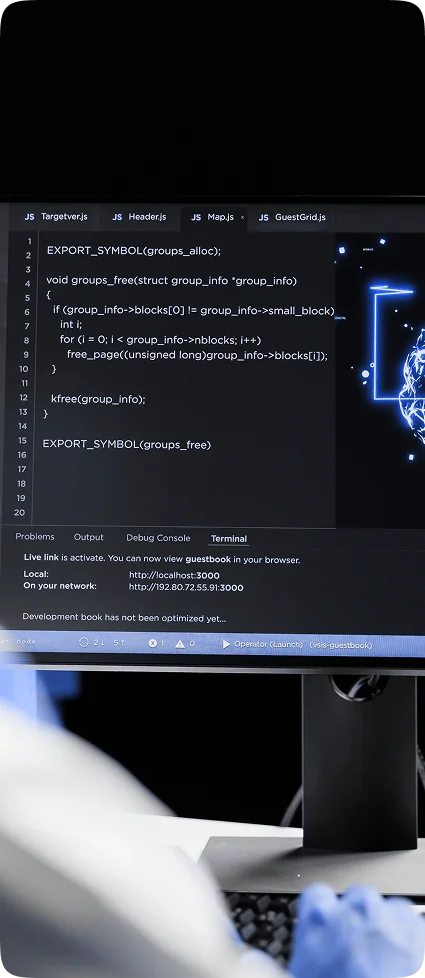


Traditional software agencies often work the same way they did years ago.

We use AI as a force multiplier across the development process to eliminate repetitive tasks, accelerate execution, improve consistency, and help teams move more efficiently without sacrificing engineering oversight or software quality.
Our engineers handle architecture, business logic, security, operational workflows, and final validation.
Many companies market AI as a replacement for engineering teams that approach creates risk.
AI generated code without proper architecture, validation, testing, operational understanding, and security review can create unstable systems, technical debt, security vulnerabilities, and long term operational problems. At Imperial Technology Partners, every AI generated output is reviewed, tested, validated, and owned by experienced engineers before deployment.


Our development approach combines:
Senior software architects
 Experienced developers
 QA specialists
 Infrastructure engineers
 Security focused workflows
 Operational business analysis
 AI assisted execution
The goal is not simply writing code faster. The goal is building better systems more efficiently.

AI helps accelerate development workflows by assisting with repetitive coding tasks, logic scaffolding, validation workflows, documentation generation, and framework implementation.
AI assisted development capabilities include:


Code generation assistance
Boilerplate reduction
API integration acceleration
Query optimization support
Refactoring assistance
Pattern recognition
Documentation generation
Validation support
Development acceleration
Our engineers remain fully responsible for architecture decisions, operational workflows, logic validation, scalability, and final implementation.


Testing is one of the most important parts of software development, yet it is often one of the most time consuming and overlooked areas of the process. AI helps improve testing coverage, identify edge cases, accelerate QA cycles, and reduce defects before deployment.
AI powered QA capabilities include:
Automated test generation
Regression testing assistance
Edge case identification
UI testing support
API testing acceleration
Validation workflow analysis
Data validation analysis
Error pattern detection
Integration testing support
Many projects begin with automated test coverage from day one instead of waiting until the end of development. This improves deployment confidence, software stability, and long term maintainability.


Security can no longer be treated as a final step in development. Modern systems require continuous security analysis throughout the Software Development Life Cycle. AI assisted security analysis helps identify vulnerabilities, permission issues, authentication weaknesses, dependency risks, and potential exposure points earlier in development.
AI security workflows include:
Every security finding is still reviewed and validated by experienced engineers and security professionals before remediation decisions are made.




Documentation is one of the most neglected areas in software development. Poor documentation creates long term operational problems, onboarding difficulties, and maintenance challenges. AI helps accelerate documentation generation while improving consistency across projects.
Documentation support includes:
Documentation support includes:
 Technical documentation
 API documentation
 Internal developer notes
 Workflow summaries
 Business logic explanations
 Deployment documentation
Change tracking summaries
Support knowledgebases
Deployment documentation
Change tracking summaries
Support knowledgebases
Better documentation improves scalability, onboarding, maintainability, and operational continuity.
AI also improves visibility and coordination across development projects. AI workflow support includes:

Task summarization
Ticket analysis
Sprint insights
Dependency identification
QA workflow tracking
Authorization tracking
Development progress reporting
Risk identification
Operational reporting
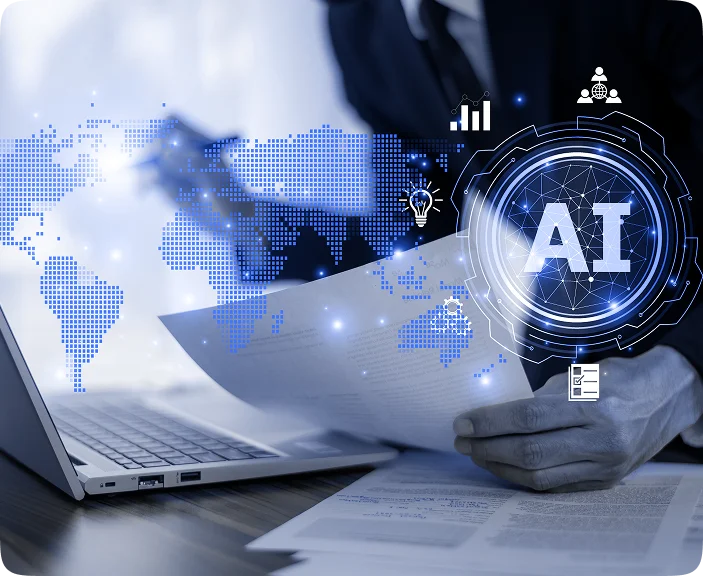
This helps teams improve communication, coordination, and execution throughout the project lifecycle.

Our process combines structured engineering
practices with AI enhanced execution workflows.

Before development begins, we focus on understanding operational workflows, business requirements, integrations, reporting needs, scalability requirements, user roles, and security considerations.
Technology should support operations instead of forcing operations to adapt to poor system design.
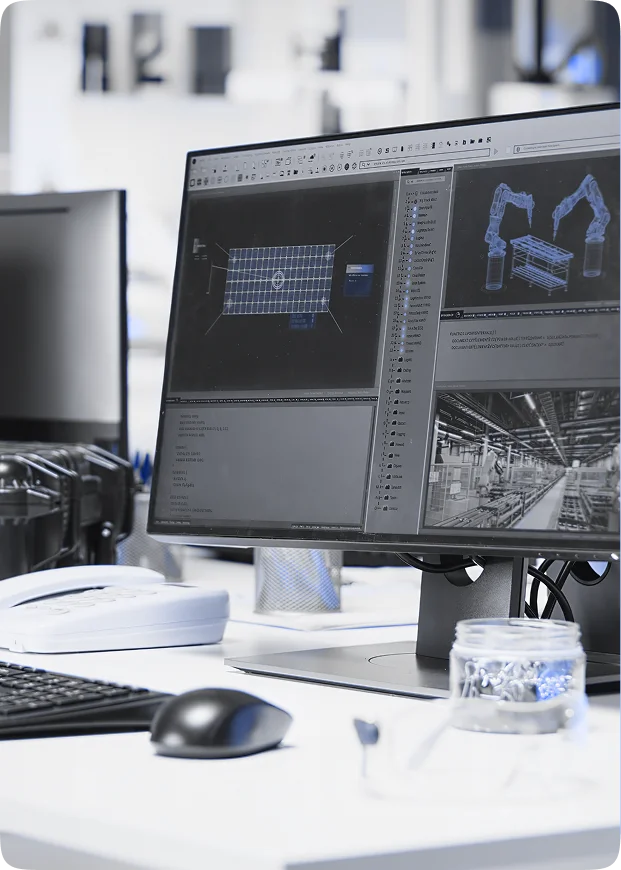
We design systems focused on:
Scalability
Security
Maintainability
Integration flexibility
Operational efficiency
Reporting visibility
Cloud readiness
Long term growth
Strong architecture reduces technical debt and future operational problems.
Development combines traditional engineering with AI accelerated workflows to improve execution speed, testing, consistency, and visibility.
AI supports repetitive coding tasks, integration workflows, testing, optimization recommendations, validation support, and documentation generation while engineers remain responsible for final implementation and system design.
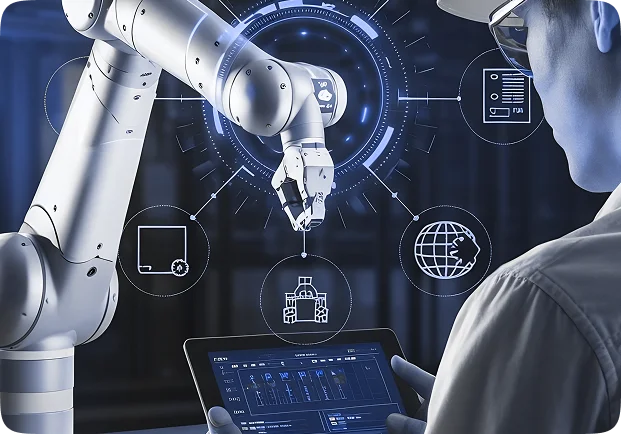
Quality assurance is integrated throughout the process rather than treated as a final phase.
Validation includes :
AI assisted QA workflows help improve testing coverage while reducing oversight and deployment risk.


Successful software deployment requires more than completed code.
We develop secure, scalable, AI enhanced systems for healthcare organizations and operational businesses.
This includes :
Our focus is building systems that improve operational efficiency, scalability, visibility, and long term maintainability.


AI augmented development allows organizations to move significantly faster while maintaining engineering oversight and software quality.
Compared to traditional development models, AI enhanced workflows can help accelerate delivery timelines, improve testing coverage, strengthen documentation, reduce repetitive work, and improve operational visibility throughout development. The advantage is not simply speed. The advantage is building stronger systems more efficiently





Modern businesses need software systems that are scalable, secure, integrated, operationally efficient, and capable of evolving over time. We combine experienced engineering teams with AI accelerated workflows to help organizations build modern platforms faster while maintaining strong architecture, security, testing, and operational reliability. Whether you are developing a healthcare platform, operational workflow system, automation environment, AI powered application, reporting portal, or custom business platform, Imperial Technology Partners helps organizations build smarter systems designed for long term success.


Imperial Technology Partners helps businesses improve operations, automate workflows, and build AI-powered systems for measurable growth.